Your Polar watch records your training, sleep, and Nightly Recharge every day, and the AI assistant you talk to every day cannot see any of it. The Model Context Protocol (MCP) is the open standard that connects the two, and eight options now do it for Polar.
This list ranks them by setup effort, from least to most. freddy is ours, and it is first: nothing to install, no developer client to register, and it reaches back into your Polar history. Each entry says who it suits.
What to know first
The question that sorts Polar options is history. Polar's standard API, AccessLink v3, returns only workouts that sync after you connect a tool, and only for 30 days; sleep and Nightly Recharge reach back 28 days (AccessLink v3). Polar's newer API, v4, can ask for older data in date ranges (AccessLink v4), and Polar's full data export covers everything as JSON files.
Any Polar Flow user can register a free developer client at Polar's developer portal, so every local option below starts there. Hosted services use their own approved client, so you only approve access on Polar's screen.
One naming trap: the "Polar" connector in the Claude and ChatGPT directories is Polar Analytics, an ecommerce tool, not your Polar watch.
Where a server runs decides where you can use it. A hosted server is a web address, so it works in Claude and ChatGPT on the web, on the desktop, and on your phone. A server on your computer works only in desktop apps such as Claude Desktop and Cursor. The Claude phone app and claude.ai cannot reach it, and ChatGPT needs a tunnel you set up yourself.
The list
1. freddy
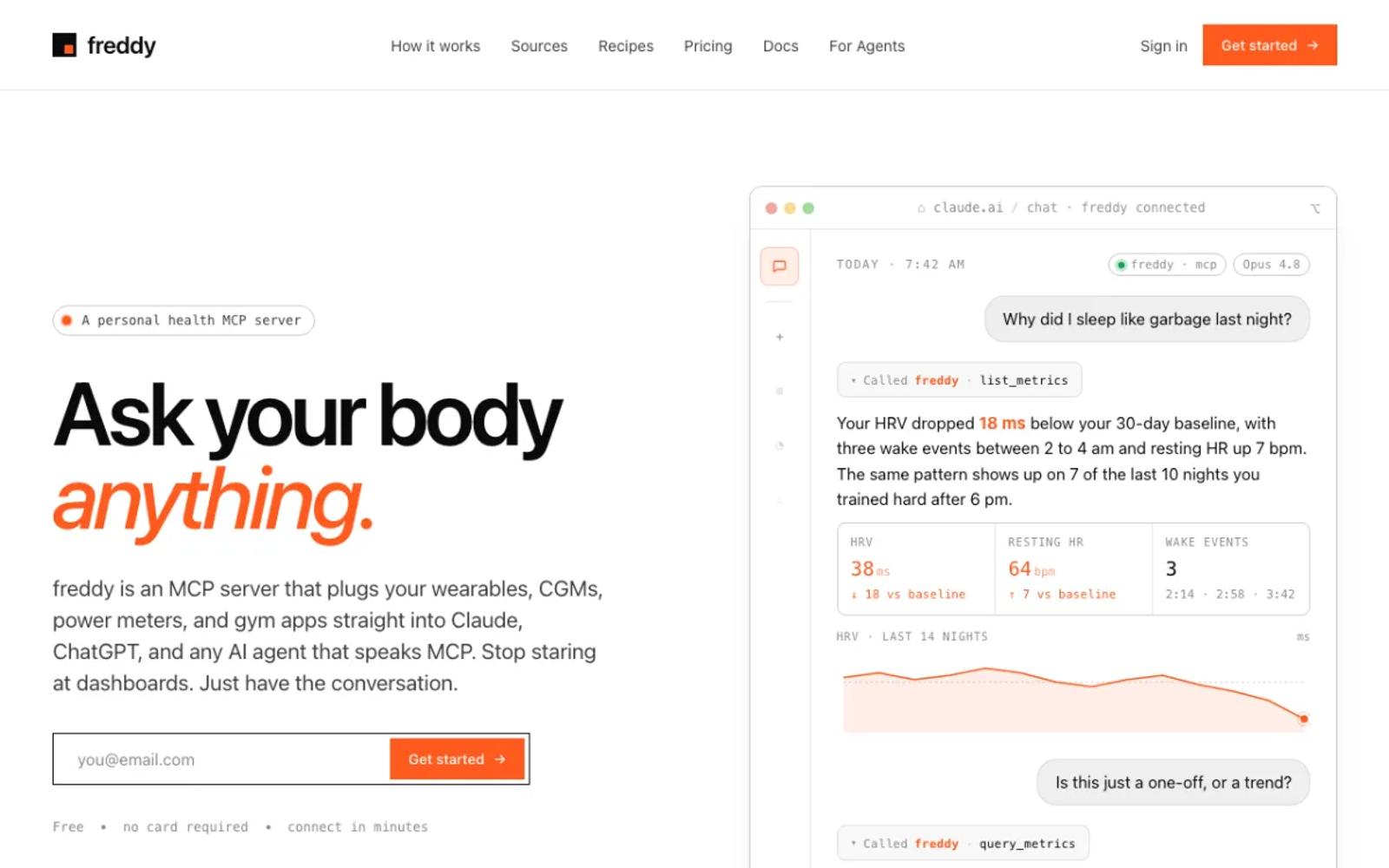
freddy is a hosted MCP server that brings your health data from all your apps into one place. You sign in with a code we email you, connect Polar on Polar's own sign-in screen, and add freddy to your AI app, from ChatGPT's app directory or with one personal URL in Claude, Cursor, or any other MCP client.
New workouts, sleep, and Nightly Recharge arrive by push soon after your watch syncs. A second Polar approval in freddy uses Polar's newer API to bring in older history, beyond the 30 days of the standard one. The same account reads Garmin, Oura, Withings, Apple Health, and more, so you can ask across all of them.
Our Polar guide walks through every step.
Setup: three steps in your browser, plus one more approval on Polar's screen for your older history. Nothing to install, and it works on your phone too.
Price: free for one source with a short history window, or $49/year for all your sources and your full history.
Best for: almost everyone with a Polar watch, and especially people who want their history, not just what comes next.
2. Tredict
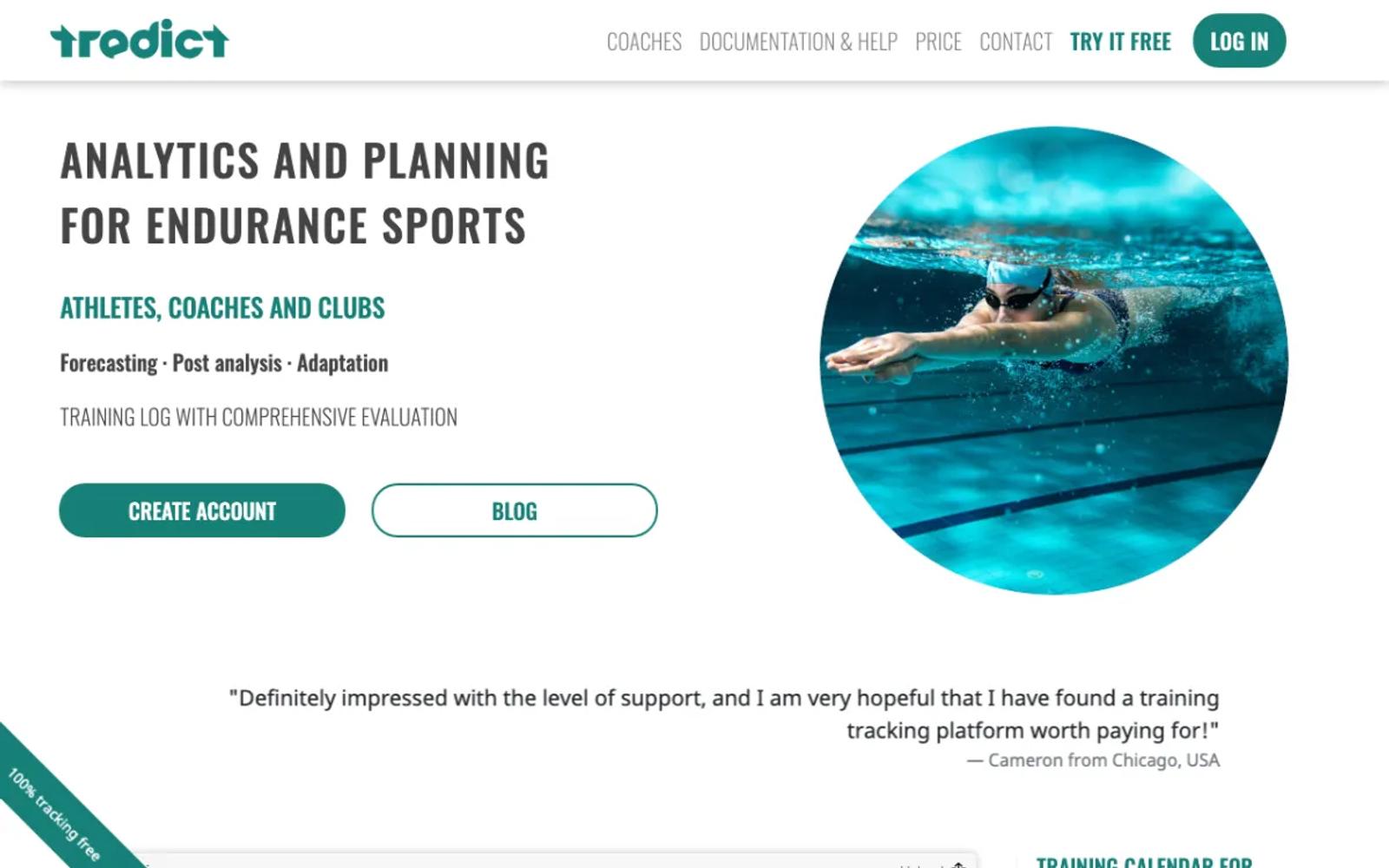
Tredict is an endurance training platform with its own MCP server and ChatGPT app. It connects Polar Flow for workouts, nightly HRV, and sleep, and it can turn a Polar data export into history. From the chat, it can build a training plan in Tredict.
It works best if Tredict is already your training log, and its MCP server needs Tredict's paid access for detailed data.
Setup: create a Tredict account, connect Polar Flow, then add Tredict to your AI app.
Price: 2 months free, then $49 for 12 months, paid once (€49 in Europe; prices).
Best for: endurance athletes who already plan their training in Tredict.
3. Wellness Project
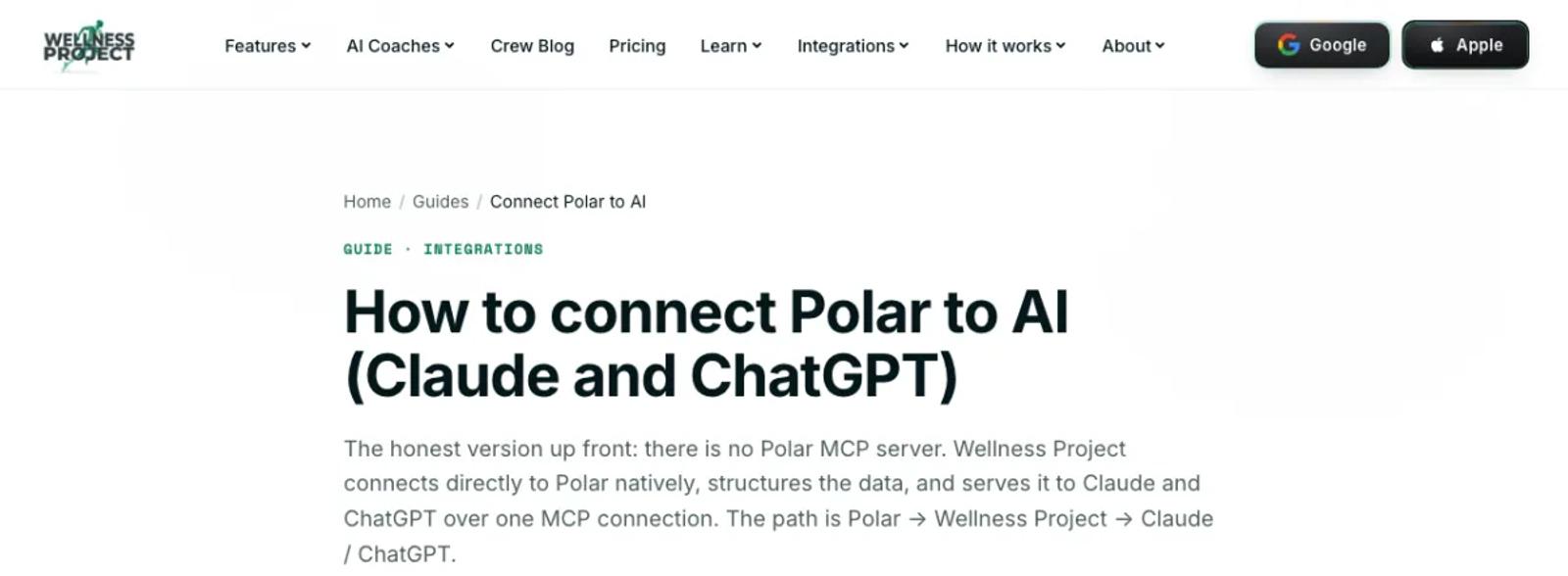
Wellness Project is a hosted coaching app with its own MCP server. It connects Polar directly for activity, sleep, recovery, heart, and training data, and its server lists 73 tools, some of which write to Wellness Project.
The free plan allows 3 analysis chats a day, with the app and your AI app counted together. Its pages do not say how much Polar history it brings in.
Setup: sign in with Apple or Google, connect Polar in the app, then add its MCP address to your AI app and sign in.
Price: a free Basic plan. Pro is $9.99 a month or $99.99 a year, with an introductory $4.99 a month or $39.99 a year until October 15 (pricing).
Best for: people who want a coaching app alongside their AI assistant.
4. AthleteData
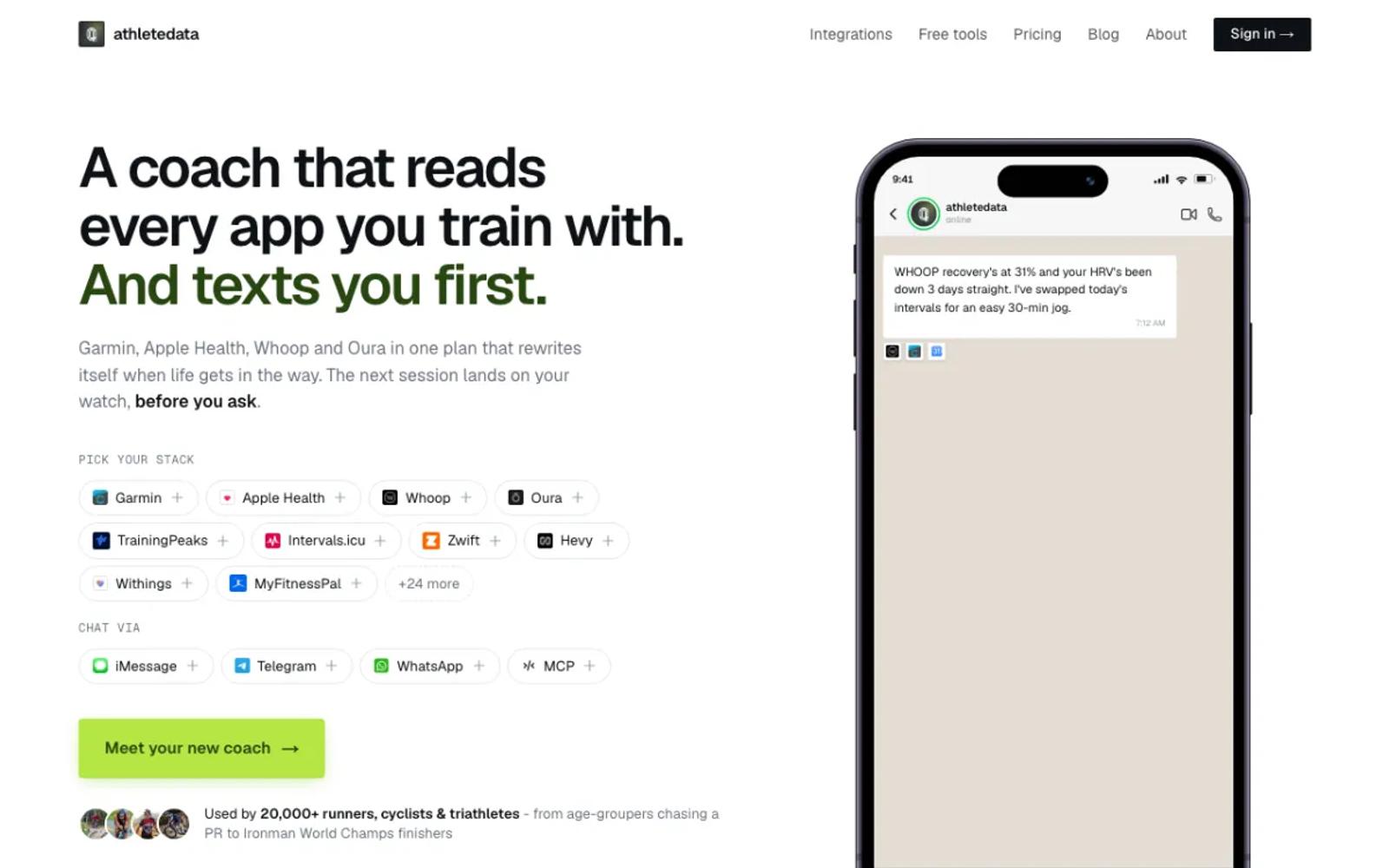
AthleteData is a hosted AI coach with a cheaper MCP-only plan. It connects Polar for activities, sleep, daily activity, and Nightly Recharge, next to more than 30 other apps. The coaching plan messages you after workouts; the MCP-only plan leaves that out.
Setup: start the trial, connect Polar, copy the API key from your dashboard, and add it to your AI app.
Price: MCP-only is CHF 9 a month or CHF 69 a year, after a 7-day free trial (plans). Coaching is CHF 29.90 a month.
Best for: athletes who want a coach that gets in touch first, as well as answers.
5. IcuSync, through Intervals.icu
An indirect route. Polar syncs to Intervals.icu, which is free, with activities, sleep, HRV, and resting heart rate. IcuSync then serves Intervals.icu over MCP, with tools that read and plan, in Claude on any plan and in ChatGPT and Grok.
Connect Polar to Intervals.icu directly, not through Strava: activities that arrive through Strava do not come back out of the Intervals.icu API.
Setup: moderate. Create an Intervals.icu account, connect Polar there, sign up for IcuSync, and paste its URL into your AI app.
Price: Intervals.icu is free; IcuSync is $20 a year.
Best for: athletes who already train in Intervals.icu.
6. polar-mcp-unofficial
A local server on Polar's newer API: 38 tools, MIT licensed, published on npm as polar-mcp-unofficial. It reads your data, and it hides GPS positions by default.
Setup: involved. Register your own Polar developer client with a local redirect address, install Node 20, and run its setup, auth, and doctor commands, which write your Claude Desktop config for you. Desktop apps only.
Price: free and open source.
Best for: technical Polar users who want the newer API on their own computer.
7. chanezgr/polar_mcp
A Python server on Polar's standard API with 15 tools, a local SQLite cache, and saved FIT files, under GPL-3.0. A scheduled mode keeps collecting, so your history grows from the day you start it.
It has no sign-in helper: you get a Polar access token yourself.
Setup: the most of the local options. Register your own Polar client, get an access token by hand, and run it in Docker or with pip.
Price: free and open source.
Best for: developers who want a growing local archive of their Polar data.
8. Open Wearables
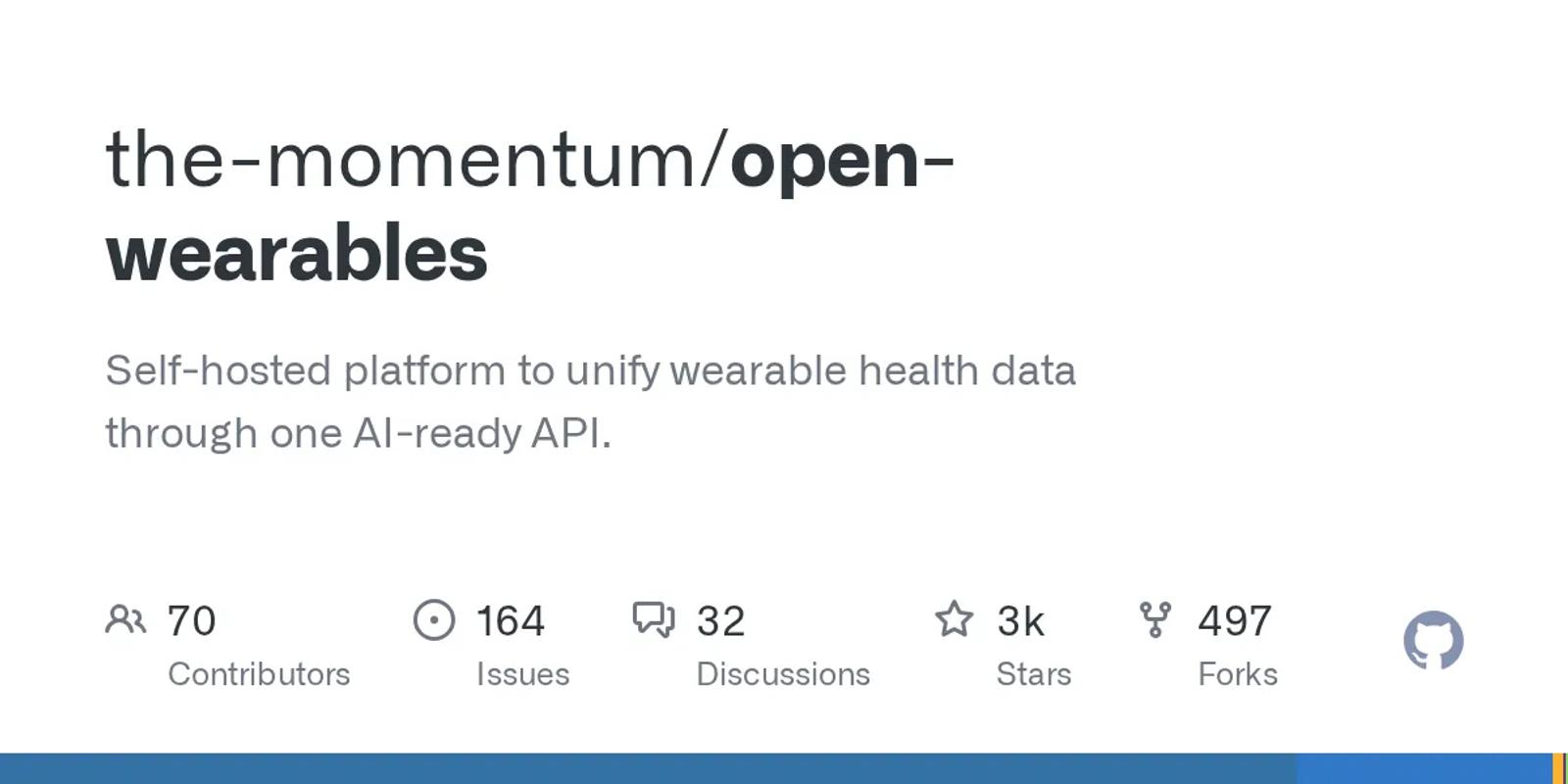
An open-source platform that you run on your own server, with 2,562 stars and an MIT license. It connects Polar with your own developer client, receives Polar's update notifications, and includes an MCP server with 6 tools. It covers several other wearables too.
Setup: the most work on this list. Run its Docker stack, put your Polar client's keys in its config, and set up the MCP server. Desktop apps only.
Price: free software. You pay for the server.
Best for: developers who want several sources on hardware they control.
| Tool | Setup | Polar history | Price |
|---|---|---|---|
| freddy | None; web, desktop, and phone | Standard API plus older history through Polar's newer API | Free tier; $49/year |
| Tredict | Tredict account; web, desktop, and phone | Synced data, plus a Polar export upload | 2 months free, then $49 per 12 months |
| Wellness Project | App and connector; web, desktop, and phone | Not stated | Free (3 chats a day); Pro $9.99/mo |
| AthleteData | API key; web, desktop, and phone | Not stated | CHF 69/yr or CHF 9/mo |
| IcuSync via Intervals.icu | Two accounts; web, desktop, and phone | What Intervals.icu has synced | $20/yr |
| polar-mcp-unofficial | Your own Polar client; desktop only | Newer API, by date range | Free |
| chanezgr/polar_mcp | Your own client and token; desktop only | Grows from the day you start | Free |
| Open Wearables | Your own server and Polar client; desktop only | Standard API | Free; you pay for hosting |
How to choose
For most people, the answer is freddy: no developer client, nothing to keep running, your older Polar history, and it works in any AI app that speaks MCP, on your phone too. The exceptions:
- You already plan your training in Tredict: its own connector.
- You want a coach that gets in touch first: AthleteData, or Wellness Project for a coaching app.
- You already train in Intervals.icu: IcuSync.
- You want it on your own computer: polar-mcp-unofficial.
Prices and details verified in September 2026. This space moves fast, so check each vendor's site for current details before you commit. For other wearables, see our roundup of wearable MCP servers.